Focus
Gravitational Time Dilation, General Relativity, Spacetime Curvature, Black Holes, Neutron Stars, Gravitational Redshift
Motivation
Scientific Curiosity, Relativity, Cosmic Understanding
About the project
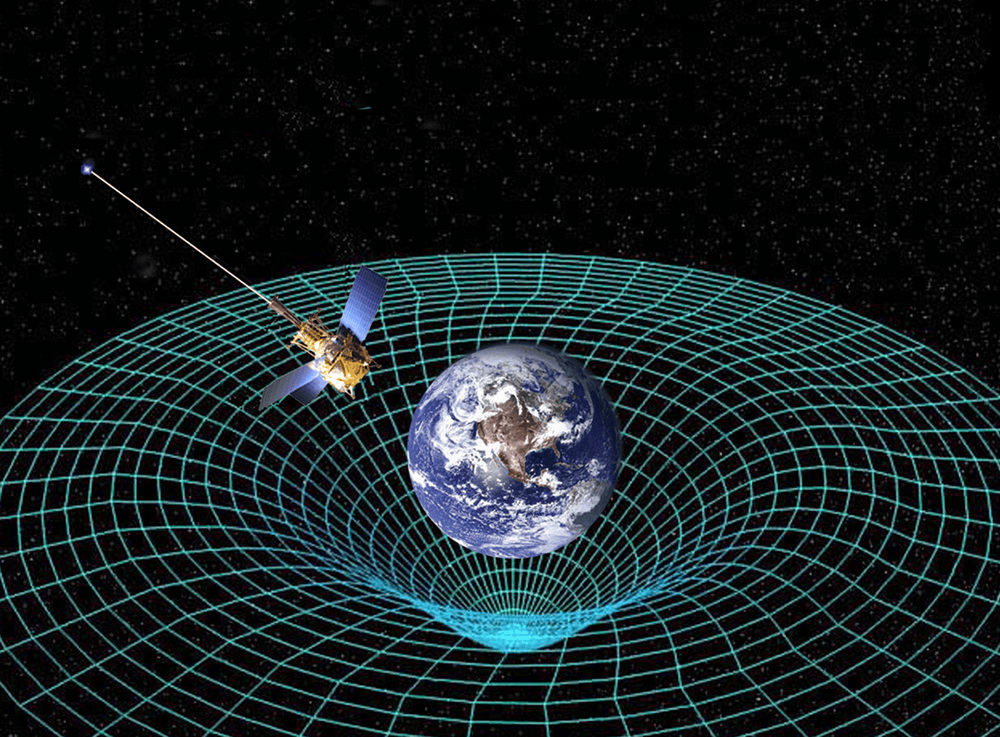
This paper examines how gravitational time dilation, a prediction of Einstein's general theory of relativity, alters the flow of time across different astrophysical entities, from exoplanets and stars to compact objects such as white dwarfs, neutron stars and black holes. The premise is that the curvature of spacetime produced by a massive body slows time near it, so clocks run at measurably different rates depending on local gravitational field strength. The study works through how this effect scales with mass and compactness, contrasting the relatively weak dilation near planets and main-sequence stars with the extreme effects near the event horizon of a black hole or the surface of a neutron star, where gravitational redshift becomes pronounced. It connects the abstract relativity to concrete reference points, including how atomic clocks and GPS satellites must correct for time dilation to remain accurate, and uses specific astrophysical examples such as the Kepler-277 planetary system to ground the comparisons. The paper's focus is comparative and explanatory: rather than reporting new observational data, it builds a structured account of how spacetime distortion, gravitational field strength and relativistic effects combine to govern temporal flow on bodies of very different densities. It spans astrophysics, theoretical and gravitational physics, general relativity and planetary science, aiming to make the consequences of general relativity tangible by mapping them onto a hierarchy of real astrophysical objects and showing why the most compact objects exhibit the most dramatic departures from the time we experience on Earth. In doing so, the paper offers a clear, example-driven explanation of why time itself is not absolute, using a ladder of astrophysical objects to show how gravity reshapes the passage of time in ways that are subtle on Earth yet extreme near the universe's densest bodies.
Check out more projects